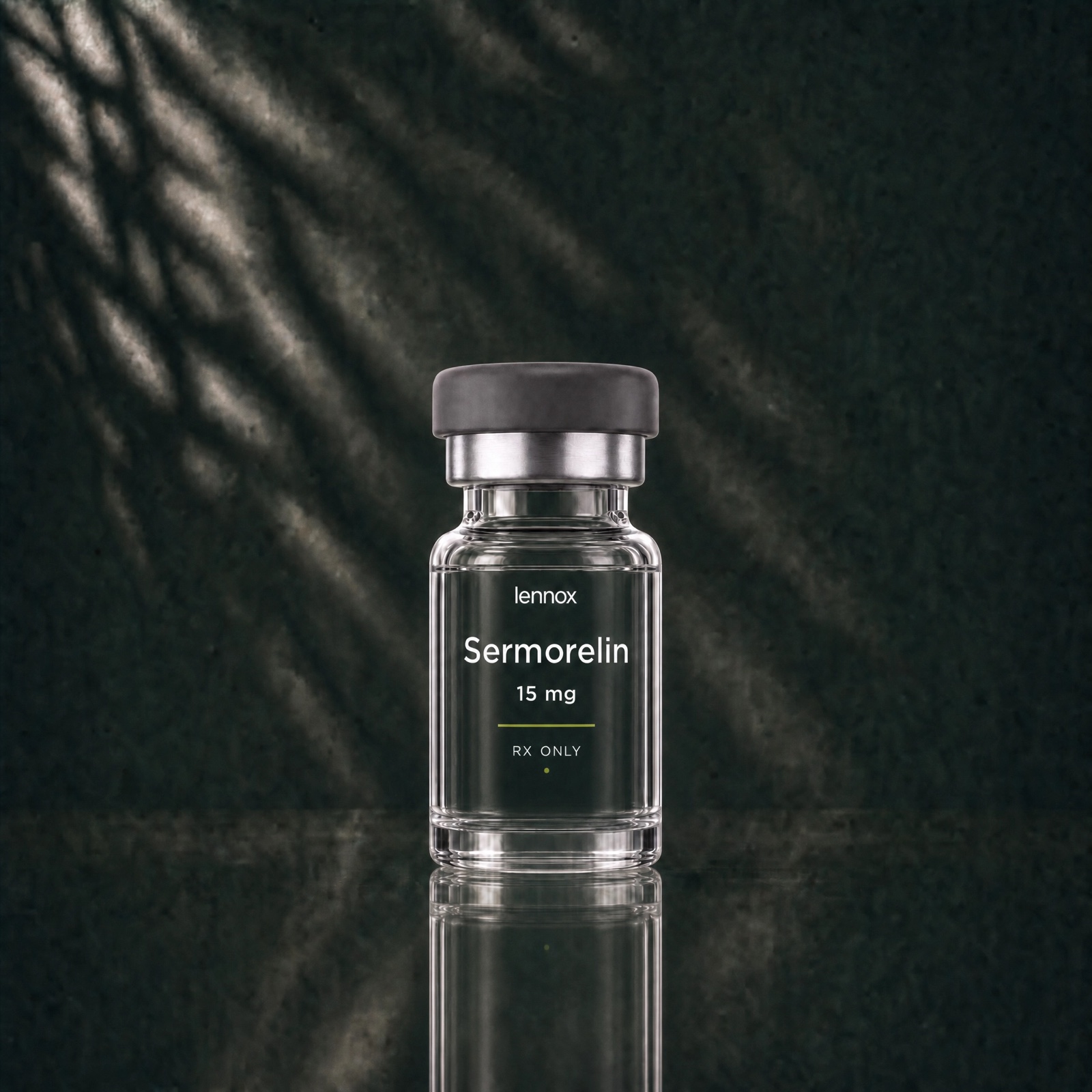
Sermorelin is a laboratory-made fragment related to growth hormone-releasing hormone (GHRH). It acts at the pituitary gland, prompting signaling that can increase the body’s release of growth hormone. That is different from administering human growth hormone directly.
The distinction is biologically meaningful. It is not proof of a particular sleep, recovery, strength, body-composition, or “anti-aging” result.
What the regulatory history tells us
FDA previously approved branded sermorelin products under the name Geref for diagnostic use and for a pediatric indication. Those products were later discontinued, and their approvals were withdrawn at the manufacturer’s request. In 2013, FDA determined they had not been withdrawn for reasons of safety or effectiveness.
That history is often summarized too loosely. A compounded sermorelin product available today is not the former branded, FDA-approved Geref product. Compounded drugs are not FDA-approved, and FDA does not verify their safety, effectiveness, or quality before marketing.
Mechanism is the beginning of the conversation
Growth-hormone and IGF-1 signaling changes across the lifespan and is influenced by sleep, nutrition, exercise, illness, body composition, and other factors. Symptoms sometimes linked online to “low growth hormone” - such as fatigue, slower recovery, or changes in body composition - are nonspecific. They can have many causes.
A responsible evaluation therefore starts with the person, not the peptide. Depending on the situation, a clinician may consider:
- health history and current symptoms;
- medications, supplements, and allergies;
- sleep, nutrition, training, and alcohol use;
- relevant examination or laboratory information;
- whether another explanation should be evaluated first;
- the limitations of the evidence for the patient’s goal.
What should be monitored?
There is no universal monitoring plan for every person or every formulation. The prescriber should explain what baseline information is needed, what symptoms should prompt a call, which follow-up measures matter, and when the plan should be reconsidered.
Product-specific questions matter too: What exact formulation is being prescribed? Which pharmacy will dispense it? How should it be stored and used? What quality standards and patient-support process apply?
Acting “upstream” does not make a treatment automatically safer, more natural, or more effective. Those are clinical questions, not conclusions contained in the mechanism.
Sources and further reading
- FDA approval package for Geref (sermorelin acetate)
- Federal Register: FDA determination on why Geref products were discontinued
- FDA: Compounding and FDA - questions and answers
This article is for general education and is not medical advice. Treatment decisions require an individual evaluation by a licensed clinician.