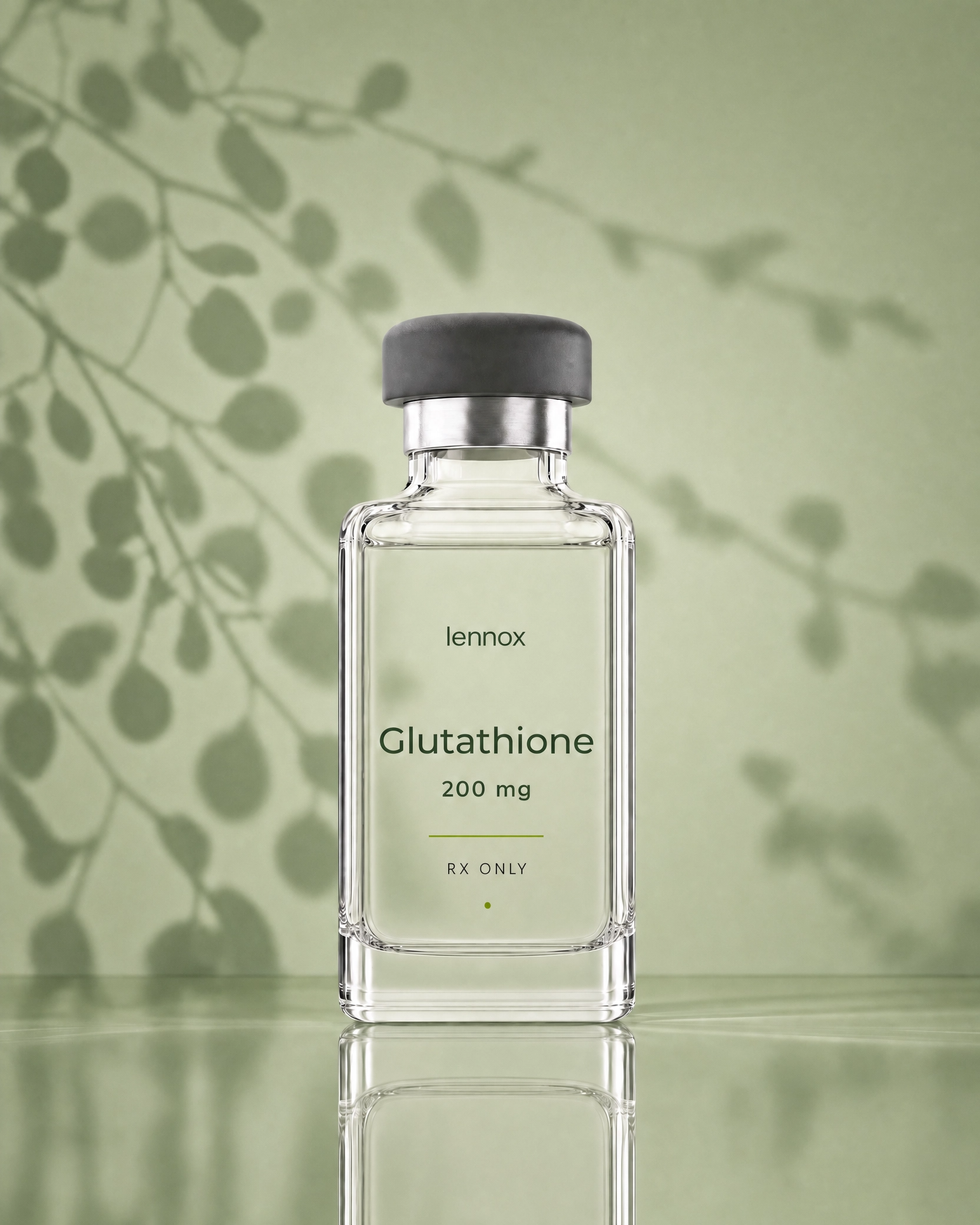
Glutathione is a small molecule made from three amino acids. Cells use it as part of a larger antioxidant and detoxification network, helping manage reactive molecules and maintain the chemical environment proteins need to function.
That makes glutathione important biology. It does not mean that every glutathione product, route, or wellness claim has the same evidence.
Endogenous glutathione and a glutathione product are not the same question
The body makes and recycles glutathione. A supplement or compounded medication introduces a specific formulation through a specific route. Oral, sublingual, inhaled, intramuscular, and intravenous approaches differ in absorption, exposure, risks, and supporting evidence.
A result from one route should not be used to promise an outcome from another.
What human studies show
Human research is heterogeneous. A randomized, placebo-controlled trial of oral glutathione in 40 healthy adults found no significant change in the oxidative-stress biomarkers it measured after four weeks. Other small studies have examined different formulations or specific clinical settings, but these do not establish broad improvements in energy, immunity, skin appearance, or longevity.
That pattern is common in longevity science: a plausible mechanism and an interesting biomarker can justify more research, but neither guarantees a noticeable benefit for an individual patient.
Why injectable quality deserves special attention
Sterile products carry risks that oral products do not. FDA has reported adverse events after patients received compounded glutathione injections made from an ingredient that was not intended for sterile use. FDA testing found excessive bacterial endotoxin in samples associated with those events.
This incident does not tell us that every glutathione product is identical. It does show why the exact ingredient source, pharmacy, sterility controls, route, and prescription context matter.
A more useful decision framework
Before considering any glutathione product, ask:
- What specific goal are we addressing?
- What formulation and route are being proposed?
- What evidence supports that route for that goal?
- What are the known risks and the important unknowns?
- Could nutrition, sleep, smoking exposure, alcohol use, medication review, or treatment of an underlying condition better address the goal?
“Antioxidant” describes a chemical role. It is not a universal clinical outcome and not a guarantee that more is better.
Sources and further reading
- Allen J, Bradley RD. Randomized trial of oral glutathione in healthy adults
- FDA alert on glutathione ingredients used in compounded sterile injectables
- FDA Pharmacy Compounding Advisory Committee evaluation of glutathione
This article is for general education and is not medical advice. Treatment decisions require an individual evaluation by a licensed clinician.