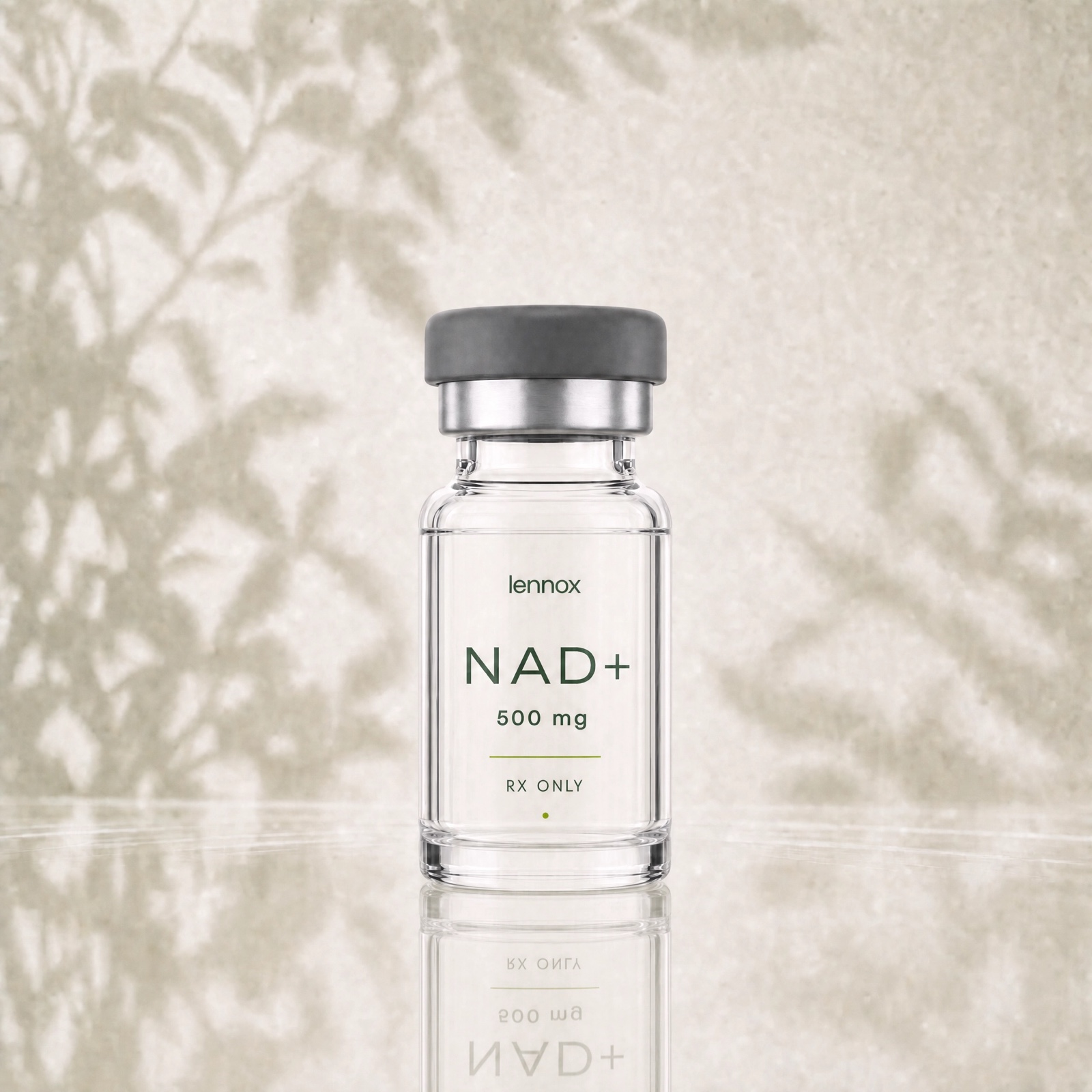
NAD+ - short for nicotinamide adenine dinucleotide - is a molecule every cell uses. It helps transfer energy from food into forms cells can use, and it participates in signaling pathways involved in DNA repair and cellular stress responses.
That biology makes NAD+ scientifically interesting. It does not, by itself, prove that raising NAD+ will slow aging, improve energy, or change how a person feels.
NAD+ is not one intervention
“NAD therapy” can refer to several different approaches: oral precursors such as nicotinamide riboside (NR) or nicotinamide mononucleotide (NMN), and formulations that contain NAD+ itself. Route, formulation, dose, duration, and the population being studied all matter. Evidence for one approach cannot automatically be applied to another.
In human studies, oral NR and NMN can raise NAD-related metabolites in blood. A 2026 randomized study in 65 healthy adults found that two weeks of NR or NMN increased circulating NAD+ concentrations. That is a useful biological finding - but a laboratory change is not the same thing as a demonstrated improvement in health or longevity.
What outcomes have human trials shown?
The honest answer is mixed.
- Small trials have generally found oral NAD+ precursors to be tolerable over the periods studied.
- Some studies report changes in selected biological markers.
- Results for patient-important outcomes - such as strength, cognition, metabolic health, or daily function - are inconsistent or still preliminary.
- Long-term safety and the effect of repeated treatment in broad patient populations are not yet well established.
For example, a 12-week pilot trial in adults with mild cognitive impairment found that NR increased blood NAD+ but did not improve the study’s primary cognitive outcome. This illustrates an important distinction: target engagement is not the same as clinical benefit.
Better questions to bring to a provider
If you are considering an NAD-related intervention, start with questions that make the uncertainties visible:
- What exact formulation and route are being considered?
- What outcome are we trying to improve, and how will we measure it?
- What evidence applies to someone with my health history and medications?
- What side effects, quality considerations, and alternatives should I understand?
- When would we decide that the approach is not helping?
NAD+ is a real and essential part of human biology. Broad claims about reversing aging or guaranteeing more energy are much larger than the current human evidence.
Sources and further reading
- Christen S, et al. Nature Metabolism (2026): randomized comparison of three NAD+ boosters
- Damgaard MV, Treebak JT. Science Advances (2023): critical review of human NR studies
- Phase II pilot trial of NR in older adults with mild cognitive impairment
This article is for general education and is not medical advice. Treatment decisions require an individual evaluation by a licensed clinician.